
Hazardous Drug Handling: Why Negative Pressure Matters

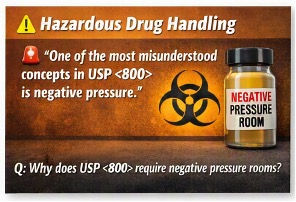
When organizations discuss USP <800> compliance, conversations often focus on personal protective equipment, workflows, and training. Yet one of the most critical and frequently misunderstood requirements remains negative pressure containment.
Negative pressure is not simply a facility design preference. It is a foundational engineering control intended to protect healthcare workers, patients, and the environment from hazardous drug exposure.
Looking Beyond Compliance
USP <800> requires hazardous drug handling areas to maintain negative pressure relative to adjacent spaces. The objective is straightforward: air should flow into the containment area, not out of it. This helps prevent hazardous drug particles and aerosols from migrating into surrounding work environments.
For executives and facility leaders, the significance extends beyond meeting a regulatory standard. Proper containment is a risk management strategy that supports employee safety, operational continuity, and organizational reputation.
Organizations that invest in robust containment controls are not only demonstrating regulatory compliance but also reinforcing a culture of safety across the enterprise.
A Global Perspective
While USP <800> is a U.S.-based standard, the underlying principles align closely with expectations found in EU GMP regulations and global best practices. Across both frameworks, the emphasis remains consistent:
Prevent cross-contamination
Protect personnel from exposure
Maintain environmental control
Ensure product quality and integrity
As healthcare systems, compounding pharmacies, and pharmaceutical manufacturers become increasingly interconnected, alignment between U.S. and European containment philosophies is becoming more important than ever.
The Real-World Challenge
The challenge is rarely understanding the concept of negative pressure. The challenge is sustaining it.
Many organizations struggle with:
Aging facility infrastructure
HVAC system limitations
Continuous pressure monitoring requirements
Balancing operational efficiency with containment needs
Maintaining compliance during renovations or expansion projects
Even well-designed facilities can experience containment failures when monitoring, maintenance, or operational discipline fall short.
Leadership's Role in Containment Success
Containment controls should not be viewed as solely an engineering or facilities issue. Effective hazardous drug programs require collaboration among executive leadership, operations, quality, facilities management, and frontline staff.
Successful organizations typically share three characteristics:
Proactive investment in containment technologies and infrastructure
Continuous monitoring to identify issues before they become compliance risks
Strong safety culture where personnel understand both the "what" and the "why" behind containment requirements
The most resilient programs treat containment as an ongoing operational priority rather than a one-time compliance project.
The Question Every Organization Should Be Asking
As regulatory expectations continue to evolve, organizations must assess whether their containment strategies are keeping pace with operational demands and patient safety objectives.
What has been your biggest challenge implementing containment controls?
The answer often reveals where the greatest opportunities exist to strengthen safety, improve compliance, and reduce organizational risk.

Comments